Fresh Milled Ezekiel Bread
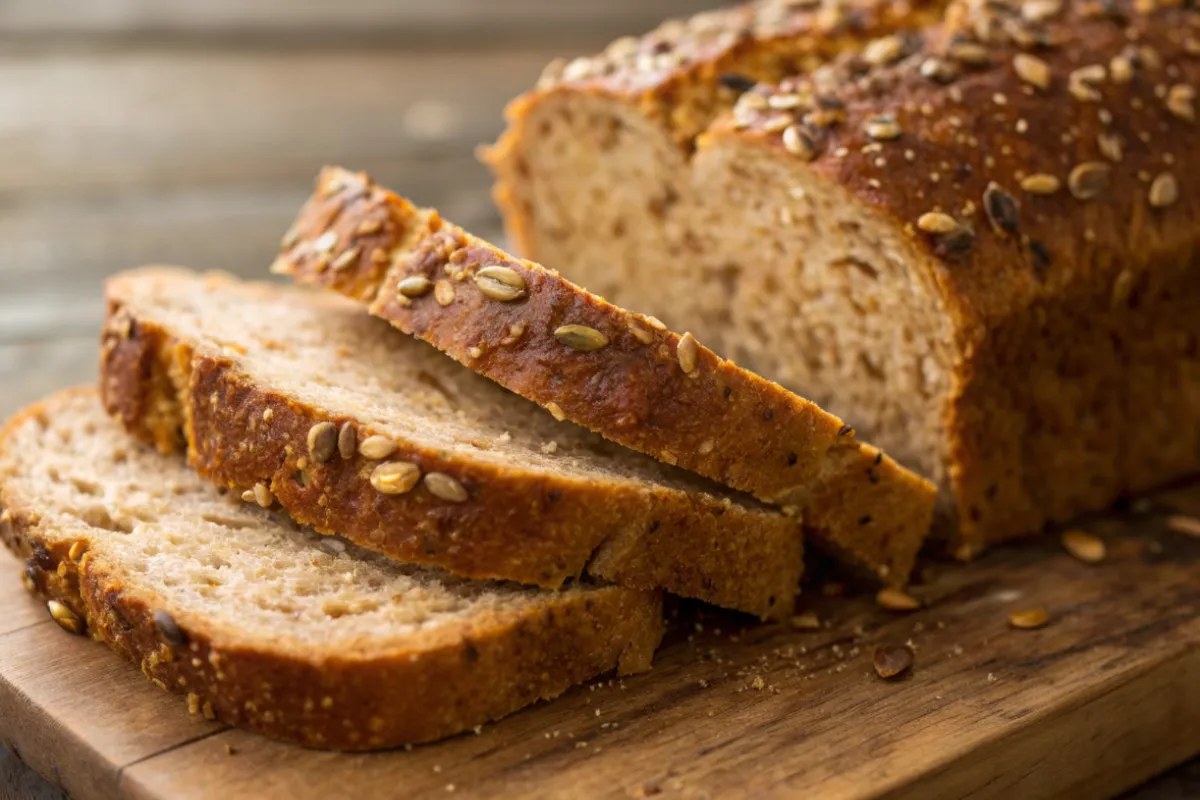
Fresh milled Ezekiel bread from the six grains and legumes in Ezekiel 4:9. One 9x5 pan loaf at 80% hydration, optional sprouting path, sourdough version too.
By Henry Hunter, founder of Crust & Crumb Academy and Baking Great Bread at Home.
- Prep
- 45 minutes active (milling, mixing, shaping)
- Rise
- About 2½ hours total rise time
- Bake
- 40 to 45 minutes
- Total
- About 5½ hours milled dry. Add 2 to 3 days if you sprout the grain first.
- Yield
- One 9 by 5 inch (23 by 13 cm) pan loaf, about 960g of dough, 12 to 14 slices
- Difficulty
- intermediate
- Hydration
- 80%
Ingredients
The Grain Blend (mill this)
The six ingredients named in Ezekiel 4:9. Hard red wheat carries the loaf because it's the only one with enough gluten to hold a rise. The rest are there for flavor, fiber, and protein, in amounts that don't fight the wheat.
- 300g (1½ cups + 1 tablespoon) hard red wheat berries 60%
- 100g (½ cup + 1 tablespoon) spelt berries 20%
- 40g (3 tablespoons + 1 teaspoon) hulled barley (not pearl) 8%
- 30g (2½ tablespoons) whole millet 6%
- 20g (1½ tablespoons) green or brown lentils, dry 4%
- 10g (1 tablespoon) dried beans (great northern, navy, or pinto) 2%
The Dough
Everything goes in after a short autolyse. No preferment on the yeasted path.
- 500g (about 4 cups, lightly spooned) milled grain blend (all of the above) 100%
- 375g (1½ cups + 1 tablespoon + 1 teaspoon) warm water, about 90F (32C) 75%
- 25g (1 tablespoon + 2 teaspoons) reserve water, added only if the dough asks for it 5%
- 25g (1 tablespoon + ½ teaspoon) honey 5%
- 20g (1½ tablespoons) olive oil or melted butter 4%
- 10g (1¾ teaspoons) fine sea salt 2%
- 6g (2 teaspoons) instant yeast 1.2%
- 20g (2 tablespoons) mixed seeds for topping (optional): rolled oats, sunflower, pumpkin, sesame, or flax — Pressed onto the top before baking, like the photo
Total flour: 500g
Hydration: 80%
Pro tip: Weigh the dry berries and legumes before milling. Dry milling gives back almost exactly what you put in, so 500g of grain is 500g of flour. If you sprout first, weigh again after drying, not before.
Equipment
- Grain mill (impact or stone)
- Digital kitchen scale
- 9 by 5 inch (23 by 13 cm) loaf pan
- Stand mixer with dough hook, or a bowl and your hands
- Instant-read thermometer
- Bench scraper
- Large bowl with a cover (plate, shower cap, or plastic wrap)
- Wide-mouth jar or sieve for sprouting (optional, sprouted path only)
- Dehydrator or oven with a low setting (optional, sprouted path only)
- Folding proofer (optional, helpful in a cold kitchen)
Method
Sprout the Grain (Optional) (The traditional path)
Sprouting is what the store-bought version is built on, and it does change the bread: a touch sweeter, a touch softer, and easier on some people's stomachs. It also carries the one real risk in this recipe. Sprout too long and the grain's own enzymes start breaking starch into sugar before you ever mix a dough. That's how you end up with a gummy, sticky crumb that no amount of baking fixes. Short sprout, bone dry, and you're fine.
- Rinse and Soak. Put the wheat, spelt, barley, millet, lentils, and beans in a large jar or bowl. Rinse under cool water until it runs clear. Cover with twice their depth of cool water and soak 8 to 12 hours at room temperature. Overnight is easiest.
- Drain, Rinse, Repeat. Drain completely. Leave the grain in the jar tipped on its side, or spread in a sieve over a bowl, covered loosely with a towel. Rinse and drain two or three times a day. Keep it out of direct sun.
- Stop Early. You're looking for a tiny white tail, no longer than the kernel itself. That usually takes 1 to 2 days at room temperature. Lentils and millet go first, wheat and spelt follow, beans are last. Don't wait for every bean. The moment most of the wheat shows a tail, stop. Long green sprouts mean too much enzyme activity for bread.
- Dry Completely. Spread the sprouted grain in a single layer on dehydrator trays and dry at 105 to 115F (40 to 46C) for 12 to 24 hours, until the kernels are hard and crack between your teeth like they did out of the bag. No dehydrator? Use your oven's lowest setting with the door cracked, stirring every hour, and check often. Grain that isn't bone dry will gum up a mill and throw off every weight in this recipe. Weigh after drying. You want 500g. If you're over, save the extra for the next loaf.
Wait: PT48H
Tip: Keeping the dryer under about 115F (46C) keeps the grain raw and the enzymes alive, which is the point of sprouting. If you want a sprouted flavor with less enzyme risk, dry at 150F (65C) instead. The bread will behave more like the dry-milled version.
Mill the Grain (10 minutes)
Mill fine. Coarse flour from a blend this heavy makes a coarse, crumbly loaf. Set your mill to its finest bread setting and let it run.
- Weigh the Blend. Weigh each grain and legume into one bowl: 300g hard red wheat, 100g spelt, 40g hulled barley, 30g millet, 20g lentils, 10g beans. Stir them together so the mill gets an even mix instead of a run of beans at the end.
- Mill Fine. Run the whole blend through on the finest setting. Dry lentils, navy beans, pinto beans, and most other dry beans are on NutriMill's approved list for the Impact, Harvest, and Classic, and most other home mills handle them too. Large beans can hang up in the hopper, so crack them with a rolling pin first. Some mills exclude oily legumes like soybeans, so check your manual. If your mill says no legumes, grind them separately in a high-speed blender until powdery and whisk them into the wheat flour. You should end up right at 500g of warm, fluffy flour.
- Use It Warm. Fresh flour comes off the mill warm and aerated, and that's exactly when you want to mix. No need to let it cool or rest. Move straight into the next phase.
Tip: No mill? See the FAQ. You can build this from bagged whole wheat, spelt, barley, and millet flours and grind the legumes in a blender. It won't taste like fresh milled, but it's still Ezekiel bread.
Mix and Autolyse (5 minutes, then a 30 to 45 minute rest)
Fresh milled whole grain needs time to drink before you ask it to build gluten. Bran that hasn't softened cuts the gluten you're trying to make. Lentils and beans are even thirstier. This rest is the difference between a loaf that rises and one that sits there.
- Flour and Water Only. In a large bowl, combine all 500g of the milled flour with 375g of warm water. Mix with a dough whisk or your hand until no dry flour remains. It'll look shaggy and feel stiffer than you expect. That changes.
- Rest. Cover the bowl and let it sit 30 to 45 minutes. This is the autolyse. When you come back the dough will be softer, smoother, and more cohesive, because the bran and the legume flour have finally pulled in the water.
Wait: PT40M
Tip: If your kitchen is cold, use water closer to 95F (35C). Fresh milled dough is already slower to warm up than white flour dough.
Add the Rest and Knead (10 to 12 minutes)
Now the dough gets its flavor, its fat, and its lift. Add everything, then knead until it's smooth and springy. It will never be as silky as a white dough. That's the grain, not you.
- Add Honey, Oil, Salt, and Yeast. Drizzle the honey and oil over the dough, then sprinkle the salt and yeast on top. Squeeze and fold with your hand, or run the mixer on low, until everything disappears into the dough. It'll feel slippery for a minute while the oil works in.
- Knead. Stand mixer: dough hook on low for 2 minutes, then medium-low for 8 to 10 minutes. By hand: turn it onto a lightly oiled counter and do slap-and-folds or push-and-folds for 10 to 12 minutes. Oil, not flour, on the counter. Flour would push the hydration down and the loaf gets heavier.
- Judge the Water. Halfway through kneading, feel the dough. It should be tacky, meaning it sticks to your finger and lets go, not wet and smeary. If it's stiff and tears instead of stretching, add the 25g reserve water a splash at a time and keep kneading. Most fresh milled batches take it. Some don't.
- Check Development. Done kneading looks like this: the dough pulls cleanly off the bowl or counter, springs back when you poke it, and stretches thin enough to see light through before it tears. A true clean windowpane test isn't realistic with 40 percent non-wheat grain and legumes in the mix. Thin with a few bran flecks showing is the win.
Tip: Dough temperature after kneading should be 76 to 80F (24 to 27C). Too cool and fermentation drags. Too warm and the honey-fed yeast races ahead of gluten development.
Bulk Ferment (1 to 1½ hours)
Fresh milled flour ferments fast. The bran and germ feed the yeast, and the sprouted sugars (if you sprouted) feed it faster. Don't set a timer and walk away. Watch the dough, not the clock.
- Round and Cover. Shape the dough into a ball, set it seam side down in a lightly oiled bowl, and cover. Mark the height on the side of the bowl with tape or a rubber band so you're judging rise by eye, not by memory.
- Watch for 75 Percent. Let it rise at 76 to 80F (24 to 27C) until it has grown by about three quarters, not doubled. Whole grain doughs that double in bulk tend to run out of strength in the pan. Expect 60 to 90 minutes. A warm proofer makes this predictable in winter. The surface should be domed, with a few bubbles showing, and a poke should fill back in slowly.
Wait: PT75M
Tip: Gentle, not aggressive, during bulk fermentation. One fold at the 30 minute mark if the dough feels slack. Otherwise leave it alone.
Shape the Loaf (10 minutes)
This is a pan loaf. The pan does half the work, but a tight shape still matters. A loose log spreads out in the pan and bakes flat on top. Tight shape, tall loaf.
- Grease the Pan. Grease a 9 by 5 inch (23 by 13 cm) loaf pan generously with butter or oil. Whole grain loaves with honey like to stick. A strip of parchment down the length of the pan with overhang on both ends makes lifting the loaf out painless.
- Degas and Pat Out. Turn the dough onto a lightly oiled counter. Press out the big bubbles with your palms and pat it into a rectangle about 8 inches (20 cm) wide, the width of your pan, and 10 to 12 inches (25 to 30 cm) long. Don't stretch it thin.
- Roll Tight. Starting at the short edge farthest from you, roll the dough toward you in a snug log, pressing the seam closed with the heel of your hand after each turn. Pinch the final seam shut and tuck the ends under.
- Into the Pan. Set the log seam side down in the pan. Press it gently into the corners so it fills the pan evenly end to end. The dough should come about halfway up the sides.
Tip: Oil on your hands and the counter, not flour. Every pinch of flour you add now is water you took out of the loaf.
Final Proof (45 to 75 minutes)
Cover the pan loosely with oiled plastic wrap or a shower cap and let the loaf rise in a warm spot. This is where most whole grain pan loaves go wrong, and it goes wrong in both directions. Underproofed, it tears along the side in the oven and bakes tight. Overproofed, it crowns beautifully, then sinks in the middle.
- Preheat Partway Through. About 30 minutes into the proof, set the oven to 375F (190C) with a rack in the lower third. Fresh milled dough won't wait on a slow oven.
- Watch the Crown. The loaf is ready when the center of the dough has risen about 1 inch (2.5 cm) above the rim of the pan and the surface looks smooth and slightly tight. Expect 45 to 75 minutes depending on your kitchen.
- The Poke Test. Lightly oil a fingertip and press the side of the loaf about half an inch (1 cm). If the dent fills back slowly and leaves a small dimple, bake now. If it springs back fast, give it 10 more minutes. If it doesn't come back at all, get it in the oven immediately and expect less oven spring.
Wait: PT60M
Tip: Whole grain with legumes has less tolerance for overproofing than a white loaf. If you're not sure, bake. A slightly underproofed loaf still eats well. A collapsed one doesn't.
Bake (40 to 45 minutes)
Moderate heat, longer bake. This loaf is dense with moisture and needs time for the center to set. Pull it early and the middle will be gummy, and people will blame the lentils when the real problem was the thermometer they didn't use.
- Load. Take the cover off the pan and place it on the lower-third rack in the preheated 375F (190C) oven. No steam needed. The pan and the lid of dough handle that.
- Tent at 25 Minutes. Check at 25 minutes. The honey and the sprouted sugars brown fast. If the top is already deep brown, tent loosely with foil for the rest of the bake.
- Take the Temperature. At 40 minutes, slide an instant-read thermometer into the center of the loaf from the side, just above the pan rim. You're looking for 200 to 205F (93 to 96C). Not 190. Whole grain and legume loaves need the higher number to set the crumb. Give it 5 more minutes if it's short.
- Out of the Pan. Turn the loaf out onto a wire rack right away. If it stays in the pan, steam softens the sides and bottom into a soggy crust. Tap the bottom. It should sound hollow and feel firm.
Cool Completely (At least 2 hours)
I know. But this is the loaf where cutting early actually ruins it. The starch from the barley, millet, and legumes is still setting as the loaf cools. Slice it hot and the crumb smears and gums up on the knife, and you'll think the recipe failed. It didn't. It wasn't done cooling.
- On the Rack, No Cover. Cool on a wire rack with nothing over it, at least 2 hours. Three is better. The loaf is ready to slice when the bottom is fully room temperature, not just the top.
- Slice. Use a serrated knife and a sawing motion with light pressure. Aim for slices about ½ inch (1.25 cm) thick. This loaf toasts better than almost anything else you'll bake.
Wait: PT2H
Shape the Pan Loaf
A tight roll with the seam sealed is what gives a pan loaf height instead of width.
Rolled Pan Loaf (recommended)
The standard sandwich shape. Tall, even slices.
- Pat Out. Press the dough into a rectangle as wide as your pan and about 10 to 12 inches (25 to 30 cm) long.
- Roll and Seal. Roll from the far short edge toward you, sealing the seam with the heel of your hand on each turn. Pinch the seam, tuck the ends.
- Pan It. Seam side down. Press gently into the corners.
Topped Loaf
Same shape, finished with a sprinkle of seeds like a bakery multigrain loaf.
- Brush. After panning, brush the top lightly with water.
- Top. Press on 2 tablespoons (about 20g) of mixed seeds: rolled oats, sunflower, pumpkin, sesame, or flax, whatever you have. They toast during the bake and tell everyone what's inside.
Proof test: Oiled fingertip, press ½ inch into the side. Slow fill with a small dimple left behind means bake now.
Bake in a Loaf Pan
Moderate oven, lower rack, thermometer in hand. Color isn't the signal on this loaf. Temperature is.
Oven: 190°C / 375°F. Internal temperature when done: 93-96°C / 200-205°F.
Loaf Pan (Recommended) (recommended)
A 9 by 5 inch pan gives this 960g dough the right height.
Equipment: 9 by 5 inch (23 by 13 cm) loaf pan
- Preheat. 375F (190C), rack in the lower third, 30 minutes ahead.
- Bake. 40 to 45 minutes. Tent with foil at 25 minutes if the top is dark.
- Temp. Pull at 200 to 205F (93 to 96C) in the center.
- Cool. Out of the pan immediately. Cool on a rack 2 hours minimum.
Two Smaller Pans
Split the dough into two 8½ by 4½ inch (21 by 11 cm) pans for shorter, gift-sized loaves.
Equipment: Two 8½ by 4½ inch loaf pans
- Divide. Divide the dough in half, about 480g each, and shape each as a rolled loaf.
- Bake. 375F (190C), 32 to 36 minutes, to the same 200 to 205F (93 to 96C) center.
Note: A loaf pulled at 190F looks done on the outside and gums on the inside. Trust the thermometer.
Storage
- Room temperature: 3 to 4 days in a sealed bread bag or a bread box. The legumes and whole grain hold moisture, so it stays soft longer than a white loaf.
- Refrigerated: Skip the fridge. It stales bread faster than the counter does.
- Frozen: Up to 3 months. Slice the whole loaf first, freeze in a bag with the air pressed out, and toast straight from frozen.
- Refresh: Toast it. This is a toasting loaf. For a whole loaf, sprinkle with water and warm at 350F (175C) for 8 to 10 minutes.
Slice the whole loaf the day you bake it and freeze what you won't eat in 3 days. Nothing wasted.
Frequently Asked Questions
Do I have to sprout the grains?
No. The verse names six ingredients and says nothing about sprouting. Sprouting is how the commercial version is made and it's a fine tradition, but milling the grain dry gives you a loaf that's easier, more predictable, and every bit as much Ezekiel bread. Start with the dry-milled path. Sprout once you've got the loaf down and want to see what changes.
Why is my crumb gummy and sticky even though I baked it the full time?
Three possibilities, in order of likelihood. One, you cut it before it cooled. This loaf needs 2 full hours. Two, you pulled it under 200F (93C) in the center. Three, if you sprouted, the sprout ran too long and the enzymes broke down the starch before baking. Next time stop sprouting when the tail is barely visible, dry the grain fully, and consider drying at 150F (65C) to calm the enzymes.
Can I make this without a grain mill?
Yes. Use 300g whole wheat flour, 100g whole spelt flour, 40g barley flour, 30g millet flour, and grind the 20g lentils and 10g beans to a powder in a high-speed blender or spice grinder. Bagged whole grain flour is drier than fresh milled, so you'll likely use less of the reserve water, maybe none. The flavor is milder than fresh milled, but the recipe works.
Why isn't this loaf as light as my regular sandwich bread?
Forty percent of the flour has little or no gluten. Spelt is weak, barley and millet have none that helps bread, and lentils and beans are legumes. That's the recipe, not a mistake. This loaf should be tall enough to crown the pan, soft enough to sandwich, and tighter than a white loaf. If it's brick-dense, the usual culprits are too little water, dough that was too cold during fermentation, or underproofing. Fix those before you change the grain blend.
Can I mill lentils and beans in my grain mill?
Yes, as long as they're dry. NutriMill lists lentils, navy, pinto, black, kidney, and chickpeas as safe for the Impact, Harvest, and Classic, and most other impact and stone mills handle them the same way. Crack large beans before they go in the hopper. Some mills rule out soybeans and other oily legumes, so check your manual. If your mill says no legumes, grind them separately in a high-speed blender and whisk them into the milled wheat. Never mill anything that isn't completely dry, sprouted grain included.
Why so much wheat? Shouldn't the six ingredients be equal?
Equal parts makes a brick. Hard red wheat is the only one of the six with enough gluten to trap gas and rise. At 60 percent wheat and 20 percent spelt, you have enough structure to hold up the barley, millet, lentils, and beans and still get a pan loaf you can slice for sandwiches. If you want a denser, more rustic loaf, push the wheat down to 50 percent and the spelt up to 30. Don't go below that.
Can I use pearl barley instead of hulled?
You can, and the loaf will work. Pearl barley has had the bran polished off, so you lose some fiber and flavor, and it won't sprout if you're taking that path. Hulled barley is the whole kernel and the better choice. Most stores that sell wheat berries carry it.
Can I double the recipe for two loaves?
Yes. Scale everything by two, mill 1000g of grain, and bake in two 9 by 5 pans. Bulk fermentation takes about the same time. The bake may run 3 to 5 minutes longer with two pans in the oven. Use the scale slider on this page and the amounts adjust for you.
Can I make this with my sourdough starter?
Yes. Toggle to the sourdough version. It uses the same grain blend with 100g of ripe starter in place of the yeast, a 4 to 6 hour bulk, and a warm proof or an overnight cold retard. The long ferment softens the bran and legumes and some people find it easier to digest.
Nutrition
Per serving (1 slice (about 80g, 1/12 of loaf)): 165 calories, 32g carbohydrates, 6g protein, 3g fat, 5g fiber, 330mg sodium. Makes 12 servings.